Space weather
The Sun constantly emits a stream of charged particles: the solar wind. During solar flares or coronal mass ejections (CMEs), this stream intensifies dramatically. When it reaches Earth, it interacts with our natural shield, the magnetosphere, triggering geomagnetic storms and radiation storms, with direct consequences for the technologies our societies depend on.
From the Sun to the Earth
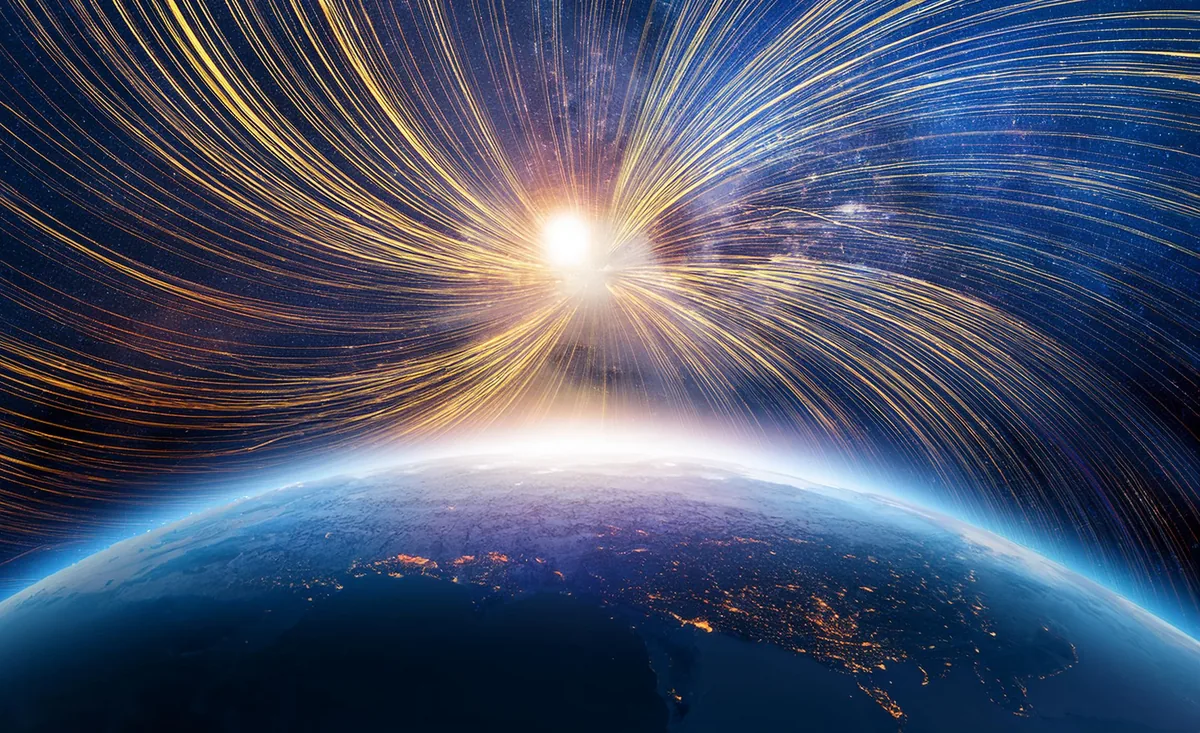
The solar wind
A continuous stream of charged particles (electrons, protons, heavy ions) ejected constantly by the solar corona at several hundred kilometers per second. It permanently shapes the electromagnetic environment surrounding the Earth.
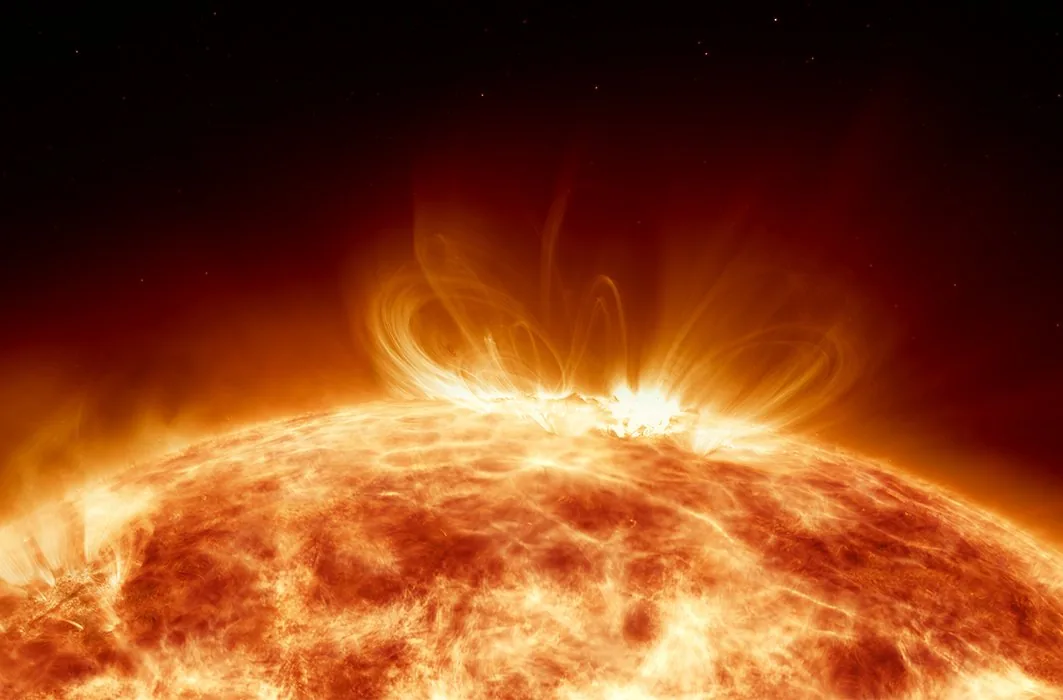
Solar flares & coronal mass ejections (CMEs)
These are two distinct phenomena: a flare releases intense radiation within minutes; a coronal mass ejection throws out a cloud of magnetized plasma. A flare's radiation reaches Earth in 8 minutes; a fast CME takes between 15 and 60 hours.
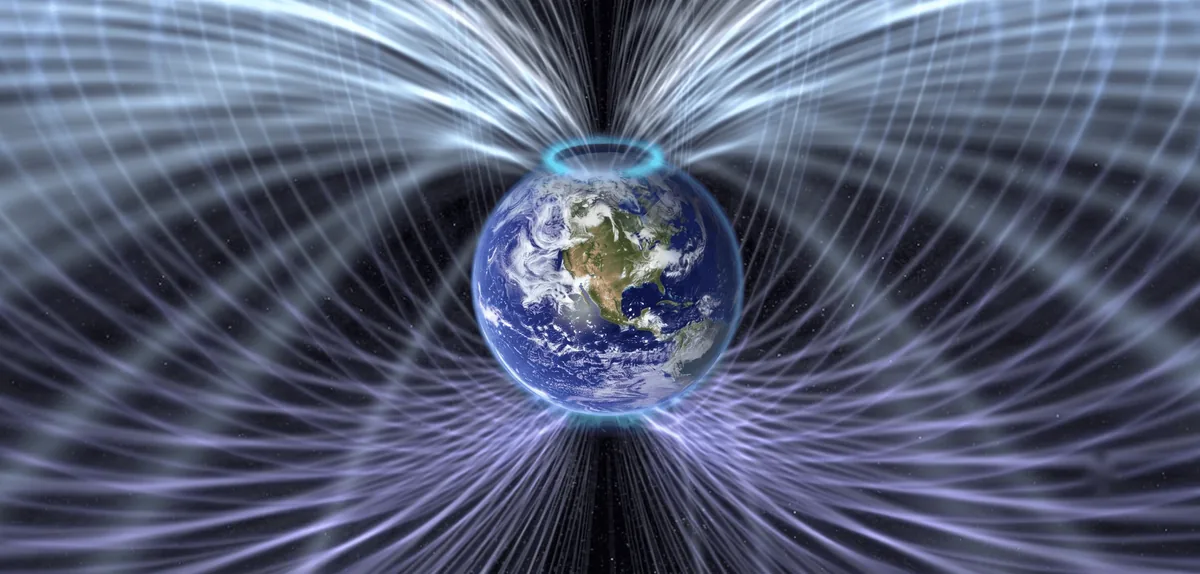
The magnetosphere
Earth's natural magnetic shield deflects most of the solar wind. Compressed and distorted by a massive influx of particles, it transfers part of that energy into the upper atmosphere and Earth's field lines.
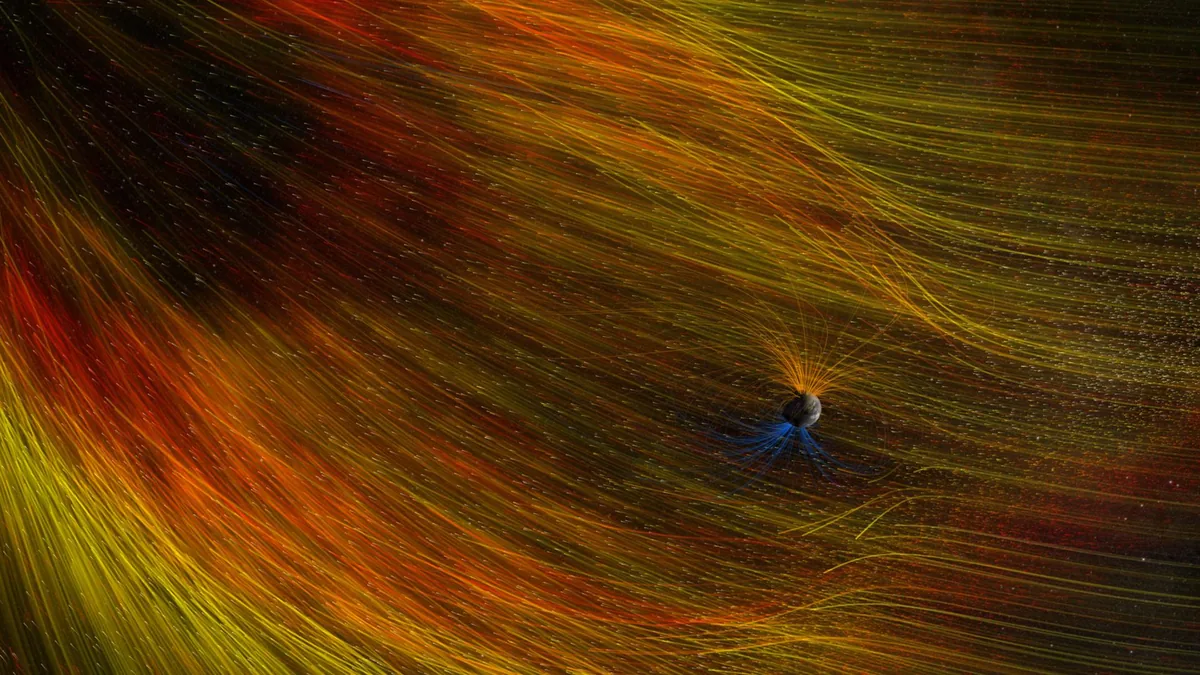
Geomagnetic storms & radiation storms
Disturbance of the magnetosphere causes geomagnetic storms (rapid variations of the Earth's magnetic field) and radiation storms (surges of energetic particles). These two phenomena are behind the operational impacts detailed below.
A risk in every domain
Low Earth orbit (LEO)
Thermospheric heating during a geomagnetic storm increases atmospheric drag on satellites, accelerating altitude loss and potentially causing premature atmospheric reentry.
Medium & geostationary orbit (MEO/GEO)
Surface and internal electrostatic charging, cumulative radiation dose (TID), and single event effects (SEE / bit flips) that degrade or damage onboard electronics.
GNSS & HF telecoms
Ionospheric scintillations degrade GNSS signal accuracy, a critical issue for aviation, precision agriculture and defense, and can disrupt HF radio links.
Ground infrastructure
Geomagnetically induced currents (GIC) saturate high-voltage transformers, disturb railway signaling and accelerate pipeline corrosion.
Space is not neutral
Arrival delay of a solar flare's radiation
The electromagnetic radiation from a major solar flare reaches Earth at the speed of light, in just over 8 minutes.
Travel time of a fast coronal mass ejection
A fast CME takes between 15 and 60 hours to reach Earth and trigger a geomagnetic storm.
people left without power in Quebec in 1989
The Hydro-Québec grid collapsed in 90 seconds under geomagnetically induced currents. It remains the clearest demonstration of what a solar storm can do to a modern power grid.
Every sector has its own vulnerabilities
Satellite operators, aviation & GNSS, energy networks, defense: discover how space weather affects your activity and how Augura Space helps you anticipate it.